Forgive me for this post, but I will go deep into philosophy here in an attempt to explain a major influence on my views of ethics. The study of ethics is one central element or study found in philosophy, and is often something the ‘real world’ covets yet knows little about. In a philosophy class, … Continue reading Readings: Principia Ethica by G. E. Moore
“Yeah, But Will It Work in ‘the Streets?’”
I often hear this question referring to many of the martial arts with sports variations (Judo, Brazilian Jiu-Jitsu, Taekwondo, Karate, etc.). I think many who ask such often have very little frame of reference for the art in question, or the streets for that matter. However, I recently heard an even better question: “What can … Continue reading “Yeah, But Will It Work in ‘the Streets?’”
Getting that First Stripe
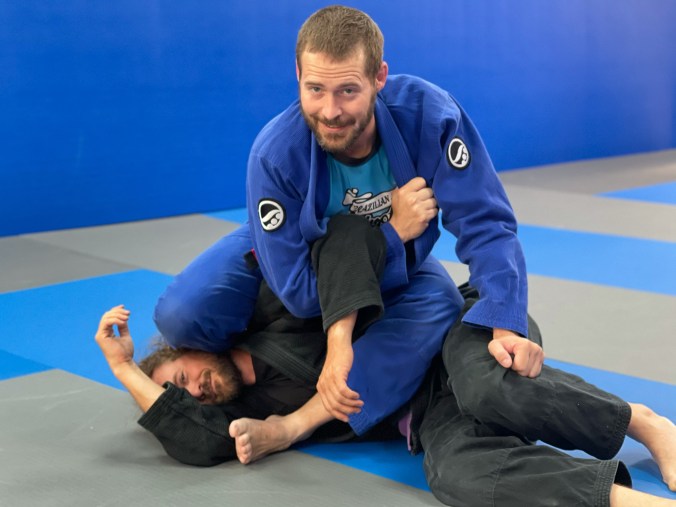
Getting that first stripe on their white belt is a tremendous feeling for many BJJ students. It may even feel better in some ways than getting a blue belt, but that could be my opinion. The first stripe is just a piece of tape, but it, in many ways, validates a person’s effort, time, and … Continue reading Getting that First Stripe
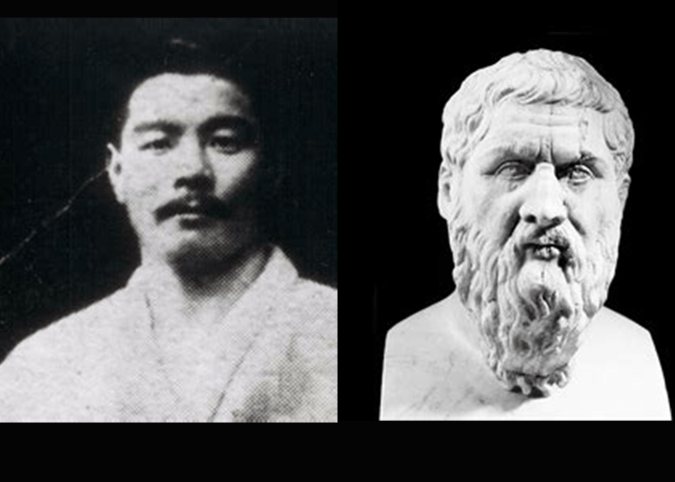
Prize Fights and Public Speeches: Maeda and Gorgias.
Lately, I’ve been studying the art and history of rhetoric in my Ph.D. program. I’ve written briefly about what I think are some interesting crossovers between martial arts and rhetoric, and this post continues in that vein, namely by describing two men who made huge changes in their respective realms of expertise: Gorgias and Mitsuyo … Continue reading Prize Fights and Public Speeches: Maeda and Gorgias.
Perfect Timing: Kairos in Martial Arts
How often have you heard the phrase, “timing is everything?” I’ve heard it most of my martial arts career, whether it was in wrestling, Karate, BJJ, or Judo. Maybe the phrase is a bit overplayed, but I’d like to offer a perspective on why timing is so important. In my studies of rhetoric and philosophy, … Continue reading Perfect Timing: Kairos in Martial Arts
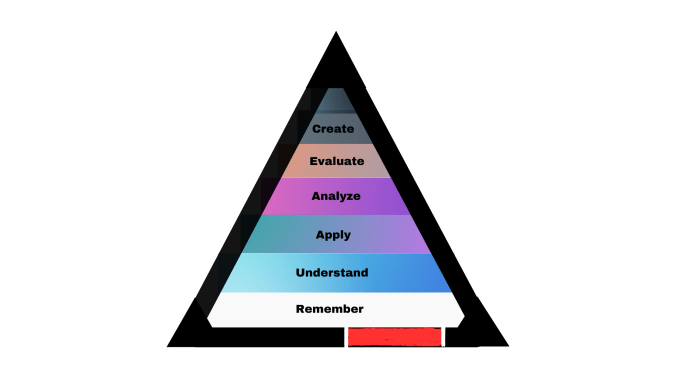
Colors and Cognition: Brazilian Jiu-Jitsu Belts and Bloom’s Taxonomy
Over the years I’ve coached martial arts, I often get asked about what criteria I use for promotion, particularly in Brazilian Jiu-Jitsu. Judo has a set criteria and curriculum, so I don’t have to worry as much about it in that art. But, in BJJ, much is left to the instructor’s discretion. From that point, … Continue reading Colors and Cognition: Brazilian Jiu-Jitsu Belts and Bloom’s Taxonomy
What is Jiu-Jitsu?
Our martial arts history has an age-old debate about the roots, stems, branches, and leaves. I’ve written previously about the differences between Brazilian Jiu-Jitsu and Japanese Jujitsu. This post takes a different look at what we call “Jiu-Jitsu” by critiquing our preconceived notions. My point is to get at just what we are talking about … Continue reading What is Jiu-Jitsu?
Readings: Thus Spake Zarathustra (Nietzsche for Martial Artists)
If you’ve ever read anything by or about Friedrich Nietzsche, you may be familiar with his concepts of will to power and the ubermensch (overman). These two key terms express Nietzsche’s defining characteristic: becoming. His book, Thus Spake Zarathustra, is a series of speeches and interactions of the prophet/hermit Zarathustra with various people and animals. Zarathustra … Continue reading Readings: Thus Spake Zarathustra (Nietzsche for Martial Artists)
C.A.T.S. PERSONAL SAFETY SYSTEM
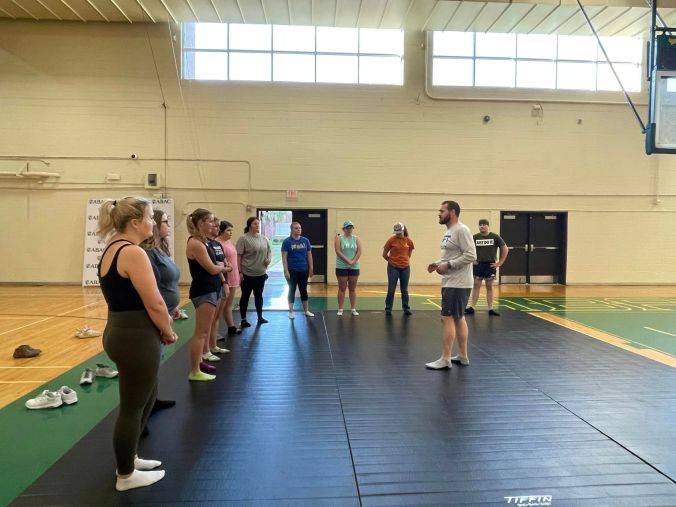
As a martial arts coach and educator, I teach self-defense seminars from time to time. While I enjoy the opportunity, I also prefer calling it a “personal safety” seminar instead of a “self-defense” seminar. I can hear detractors screaming, “semantics!” However, there is a reason for the terminology. As I understand it, self-defense implies a … Continue reading C.A.T.S. PERSONAL SAFETY SYSTEM
Humanizing Tradition: Finding a Way Forward with Understanding
On a recent Judo coaches’ forum, one coach mentioned a sensei who typically had a cheerful disposition, happily helping young students learn a technique. However, on one particular day, the sensei saw a brown belt, maybe 18 years of age, “walking to his mat area with his belt slung around his neck.” The sensei proceeded … Continue reading Humanizing Tradition: Finding a Way Forward with Understanding
A Philosophical Speech About Death
You may have read my blog post about death being life's picture frame. I took that concept and extended it into a speech for the Institute of General Semantics. The major influences of the idea stem from Gregory Bateson and Corey Anton, both of which have extensive ties to the organization. If you have never … Continue reading A Philosophical Speech About Death
Fighting Change Philosophically: Postman’s Loving Resistance Fighter
Since closing my martial arts academy, I’ve found various ways to stay on the mat, including visiting other gyms and helping coach my daughter’s middle school wrestling team. It’s been a bit of a change of pace from teaching several nights a week, but I have enjoyed the different atmospheres. I’ve also pondered my title, … Continue reading Fighting Change Philosophically: Postman’s Loving Resistance Fighter
Readings: The Structure of Scientific Revolutions
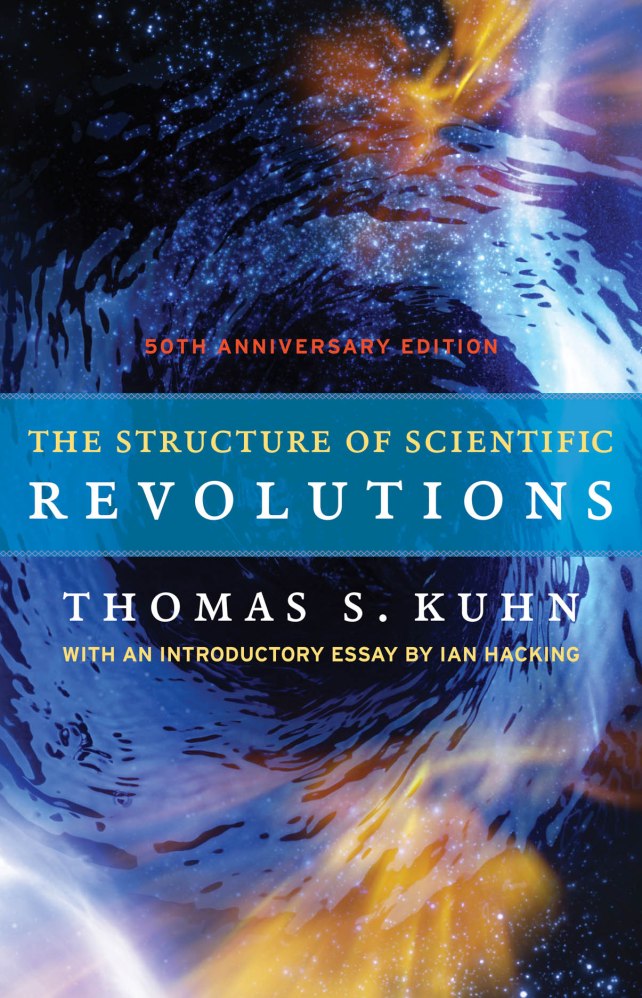
I first learned about Thomas Kuhn’s 1962 game-changing book, The Structure of Scientific Revolutions, in my undergrad “History of Science and Technology” class. After reading the book, I see how Kuhn looks at science, not as necessarily a truth-seeking endeavor, but more of a rhetorical process. Scientists aren’t discovering truth, but studying and advocating for better … Continue reading Readings: The Structure of Scientific Revolutions
Letting Go, part 2.
Recently in class, one of my students who had moved away stopped by for a visit. We were training and he tried to break my grip from his collar. He couldn’t and remarked, “Geez, Coach! You have a strong grip!” Aside from him not using the proper technique to strip the grip, I do have … Continue reading Letting Go, part 2.
Legends: Judo Gene LeBell and Leandro Lo
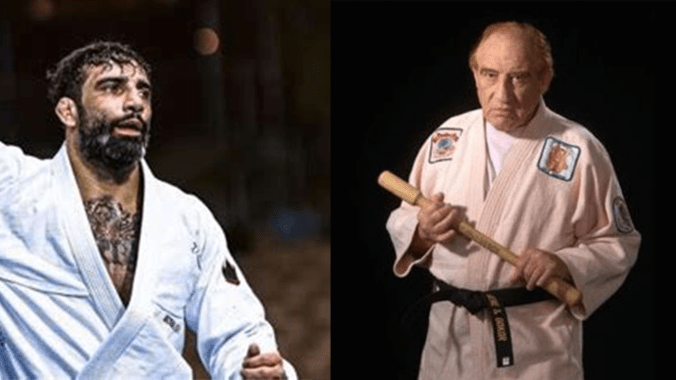
The grappling world recently lost two incredible individuals: Judo Gene LeBell and Leandro Lo. One was from an era of tradition, yet broke the rules; the other was from a newer age of a rapid-changing art where the rules were still being written. They both pushed boundaries. "Judo" Gene LeBell Judo Gene LeBell, who passed … Continue reading Legends: Judo Gene LeBell and Leandro Lo
Death as Life’s Picture Frame
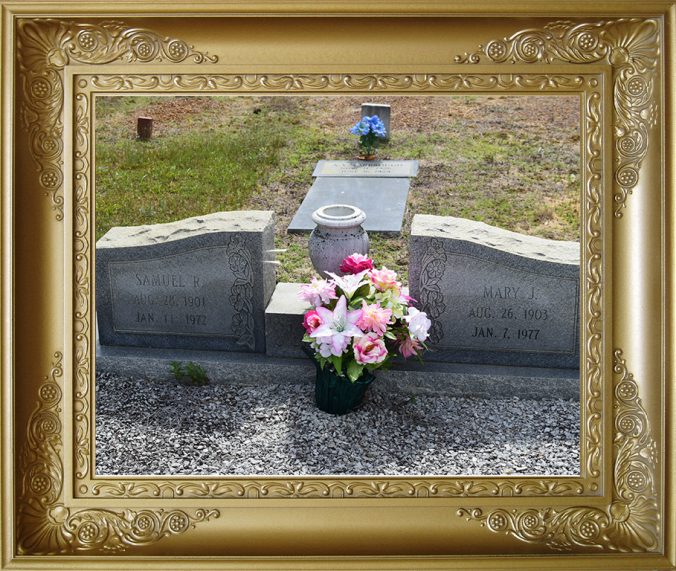
I know it may be an old pastime, but I still enjoy reading a newspaper. I always pay attention to the obituaries section, usually looking for names I know from my parents’ and grandparents’ age. Something struck me the other day, though. I read a name and looked at the age. I did not know … Continue reading Death as Life’s Picture Frame
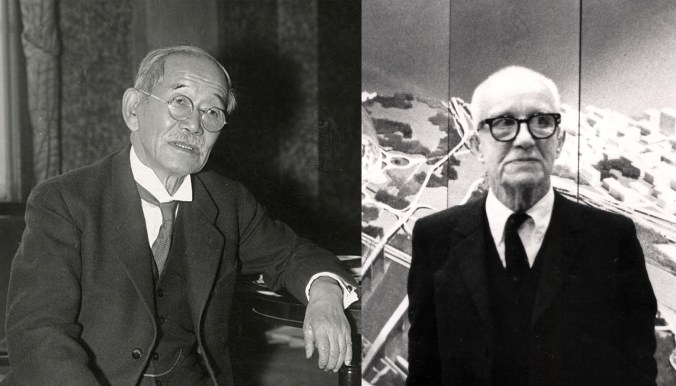
Maximum Efficiency: Jigoro Kano and Buckminster Fuller
In Judo, we often hear the phrase, “Maximum Efficiency, Minimum Effort.” Judo’s founder, Jigoro Kano, spoke about the concept in 1932 during a speech at the University of Southern California. He said that for anything to be ideal, it must be performed on the principle of maximum efficiency. Throughout the speech, he argued about using … Continue reading Maximum Efficiency: Jigoro Kano and Buckminster Fuller
Don’t Drink the Water: Wisdom From A Seafaring Stranger
In Samuel Taylor Coleridge’s Rime of the Ancient Mariner, a haggard-looking old seafarer stops a young man on his way to a wedding. The old man begins to tell his tale to the young wedding guest. The mariner tells of how he, on a whim, shoots the albatross that has been leading his ship through icy … Continue reading Don’t Drink the Water: Wisdom From A Seafaring Stranger
Rationality is overrated.
I like to tell myself that I’m a rational person. In feedback on an upcoming publication, I was called a “neo-liberal.” I wasn’t sure how to take that, but the implication was that I was too rational for my own good. I admit I lean heavily on logic and identify in many ways with the … Continue reading Rationality is overrated.
More Human, Less Lizard: Stoicism as an Antidote
When a person thinks of the word “Stoic,” there is often the assumption of no emotion or, at the least, indifference to feelings. Think of Spock from Star Trek fame. While there is a bit of truth that Stoics tend toward rationality instead of emotional outbursts, mainly due to training the mind and will instead … Continue reading More Human, Less Lizard: Stoicism as an Antidote
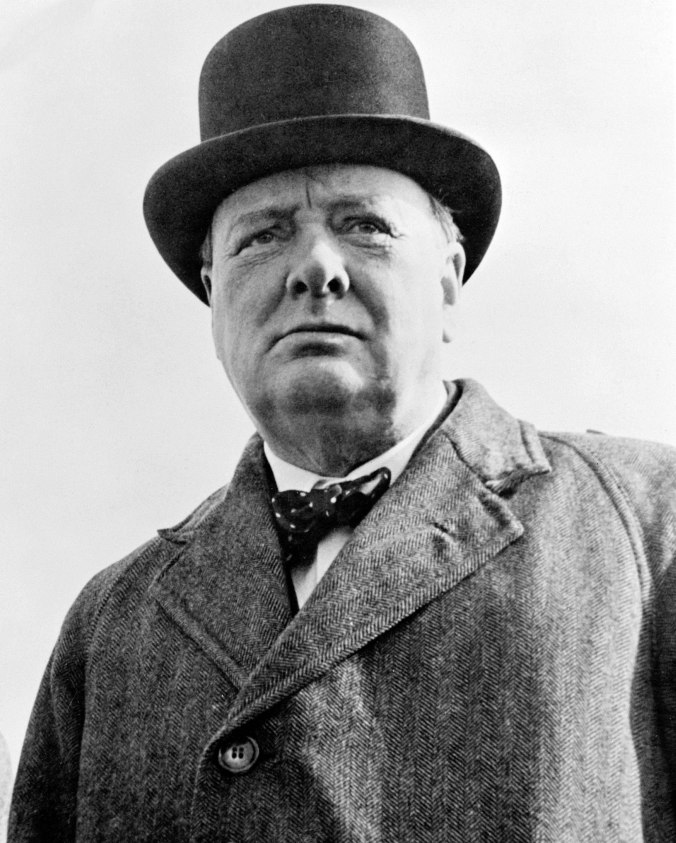
Churchill on Change: Be Like Water
I am a sucker for biographies of Winston Churchill. I can’t explain it, but his life is an amazing story to me. I don’t know whether it’s his resolve in the face of danger or his startling wit that I’m drawn to, but Churchill ranks at the top of my list of interesting people. One … Continue reading Churchill on Change: Be Like Water
Hear ye, hear ye: Podcasts for Philosophers, Professors, and the Public.
I often cite books and articles or web pages in my writing but rarely mention podcasts. I’ve recently started listening to more of them and wanted to highlight some of what I’m listening to. If you have an interesting podcast that deals with education, philosophy, martial arts, or similar veins, share it with me. If … Continue reading Hear ye, hear ye: Podcasts for Philosophers, Professors, and the Public.
The “Simpler” Gentle Art: Applying Occam’s Razor to Jiu-Jitsu
Have you ever seen something and thought, “There’s got to be an easier way to do this”? A recent post from a friend and fellow Jiu-Jitsu coach, Scott Ferguson, and a rereading of Old School Jiu-Jitsu Manifesto made me want to discuss applying one of philosophy’s tools to martial arts, primarily sport Brazilian Jiu-Jitsu. This … Continue reading The “Simpler” Gentle Art: Applying Occam’s Razor to Jiu-Jitsu
Epistemology and the Media Environment
To take a minor detour from my usual posts here at "The Philosophical Fighter," I want to tell you about some of what I've been working on academically. I recently had the chance to present my research on QAnon, a meta-conspiracy theory, and the media ecology perspective taken by Neil Postman. You may have seen … Continue reading Epistemology and the Media Environment
Peace of Mind: Modern Problems With Ancient Solutions
I took my kids deer hunting with me this weekend. The weather was wonderful. Not too hot; not too cold. The mosquitoes weren’t out. But neither were the deer. We weren’t in the stand for 30 minutes before my son whispered, “this is boring.” This is the same kid who had hounded me repeatedly to … Continue reading Peace of Mind: Modern Problems With Ancient Solutions
Can You Change Your Life by Changing Your Opinion?
I recently saw a meme quoting Mac Anderson that read, “You are always one choice away from changing your life.” I don’t know much about the author or the originality of his idea, but the essence of the quote can be found millennia ago. Marcus Aurelius wrote something very similar in his diary. In book … Continue reading Can You Change Your Life by Changing Your Opinion?
Kano’s Vision: Judo as a Humanistic Endeavor
One of the primary martial arts we teach at my academy is Judo. When people ask me about Judo, I get excited. I mention the physical attributes such as the emphasis on throwing your opponent to the ground and rendering him immobile with a pin. But there is also an equally beautiful quality in Judo … Continue reading Kano’s Vision: Judo as a Humanistic Endeavor
What is Framing and How Does It Affect My Life?
Have you ever thought about how the words you use to describe an event or a situation in your life may determine the outcome or impact your reality? Here’s an example from Daniel Kahneman’s Thinking, Fast and Slow: “Italy won; France lost.” Kahneman asked, “Do those statements have the same meaning? The answer depends entirely … Continue reading What is Framing and How Does It Affect My Life?
One Habit That Can Change Your Effectiveness.
A lesson my friend and fellow coach Scott Ferguson often teaches his classes is that faster isn’t always better. He asks his students to add 2+2 and give him the answer. Just as they start to speak, he yells “7.” The point he illustrates is you can be faster but that doesn’t mean you are … Continue reading One Habit That Can Change Your Effectiveness.
Coaching Wisdom from Dr. Rhadi Ferguson
At the 2021 ATJA National Judo tournament, I was privileged to meet Dr. Rhadi Ferguson, a man of many accolades and much experience. He was a 2004 Judo Olympian, a Brazilian Jiu-Jitsu black belt, ADCC competitor, and D1 wrestler. As impressive as his martial arts knowledge and ability may be, I was more impressed with … Continue reading Coaching Wisdom from Dr. Rhadi Ferguson
A Philosophy for Passing Guard
One of the major facets of Brazilian Jiu-Jitsu is the guard. That also means knowing how to pass the guard is equally as important. There are numerous guard passes, each with its own utility for the given guard you are trying to pass. But having so many tools in your arsenal can also make it … Continue reading A Philosophy for Passing Guard
Catching Up With Old Friends
First, let me apologize for being away so much recently. I am finishing my master's in the next few weeks and have had to buckle down on my thesis. That process has taken much of my time and mental energy. As a brief break from the mental drudgery, I spent the weekend at The Greatest … Continue reading Catching Up With Old Friends
What Does “Know Thyself” Mean?
Gnothi seauton Know thyself is not a question, but a command. The phrase was inscribed at the entrance of the Temple of Apollo in Ancient Greece. People traveled to this temple seeking divine counsel from the oracle of Delphi, the messenger of Apollo. It was there to remind those who entered of their place in … Continue reading What Does “Know Thyself” Mean?
What a Golem Can Teach Us About Teaching.
Have you ever had a teacher or coach that made a difference in your life? Can you think back to something they said or did that you have repeated or emulated? Maybe you are a coach or teacher and can think of times when a student thanks you for the impact you’ve had or the … Continue reading What a Golem Can Teach Us About Teaching.
Training as a Relationship: Partners Aren’t a Food Group.
Training is a relationship. If your interests are not in keeping your training partner safe, healthy, and able to continue to train, then it’s not a positive relationship. Training is about give and take. Ancient gladiators in Rome practiced different skills and with various partners to prepare to fight to the death in the arena. … Continue reading Training as a Relationship: Partners Aren’t a Food Group.
A Way With Words: John Danaher and the Transmission of Knowledge
John Danaher is arguably one of the best Brazilian Jiu-Jitsu coaches in the world. He’s known for his incredible insights in BJJ and martial arts in general. He has a philosophy degree, which adds a feather to his cap to me. Danaher’s teaching method is something that martial arts coaches and academics alike should study. … Continue reading A Way With Words: John Danaher and the Transmission of Knowledge
How Do You Find Motivation?
I’ve had several students at my college come to me lately asking what I do for motivation. I admit I am not a motivational expert. I don’t have any witty or sensational quips to offer them. Instead, I take a different tactic, one that involves a brief history lesson. When we begin to doubt our … Continue reading How Do You Find Motivation?
A Judoka walks into a Wrestling room…
In my last post, I discussed several elements and techniques that translated from Brazilian Jiu-Jitsu into Wrestling. I would be remiss if I didn't also discuss some of the similarities between Wrestling and Judo. These two arts share similar rule-sets and have arguably borrowed from each other through the last century. The parallels between them … Continue reading A Judoka walks into a Wrestling room…
A Jiu-Jiteiro walks into a Wrestling room…
While helping coach wrestling at my local high school for five seasons, I also trained Brazilian Jiu-Jitsu in the off-season. It was a whirlwind of techniques and rule-sets, with each system using various leverage points. There were similarities and differences between the systems, but I tried to focus on what united them. They were both … Continue reading A Jiu-Jiteiro walks into a Wrestling room…
How does Brazilian Jiu-Jitsu fair against multiple attackers?
A question on Quora made me think critically about Brazilian Jiu-Jitsu and how it may fair in a fight against multiple attackers. I think one of the common misconceptions of BJJ is that it is seen as a sport or grappling-only art in recent years. While that is true in many cases, BJJ is often … Continue reading How does Brazilian Jiu-Jitsu fair against multiple attackers?
Poetry in Motion: A Philosophy of Jiu-Jitsu
(Photo by Richard Bustos on Unsplash) Is there a philosophy of Jiu-Jitsu? It makes a great metaphor for life, but there are also great analogies to explain the learning process of this beautiful art. Let’s address the question with a little help from Brazilian Jiu-Jitsu phenom and MMA fighter Ryan Hall. In a recent video, … Continue reading Poetry in Motion: A Philosophy of Jiu-Jitsu
Readings: Thinking, Fast and Slow (and What That Means for Martial Artists).
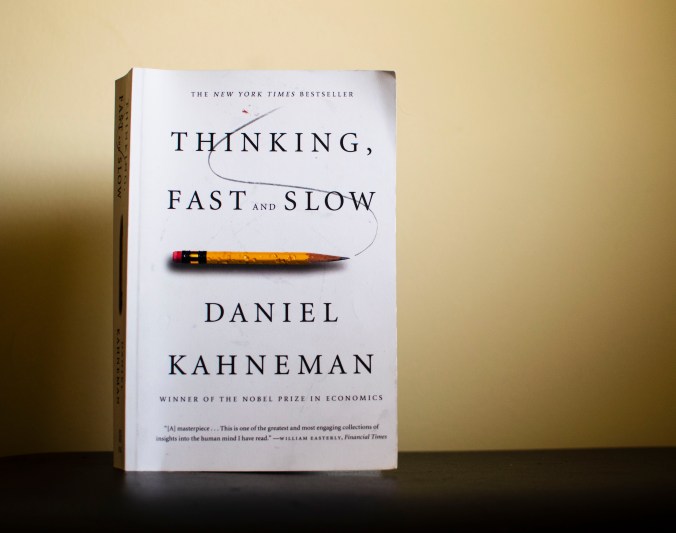
Daniel Kahneman is a Nobel Prize winner in Economic Sciences (decision making) and a former professor of psychology at Princeton University. His 2011 book, “Thinking, Fast and Slow,” is still a popular book for people trying to figure out how our cognitive selves operate. Though he is intelligent and highly educated, he can take the … Continue reading Readings: Thinking, Fast and Slow (and What That Means for Martial Artists).
Looking Back. Looking Forward.
It’s safe to say we have all had an interesting, if not rough year. It would be easy to say that the year was a complete bust for most of us. With COVID shutdowns, election-year drama, and unexpected surgeries (in my case), who knew if we would survive. If there is one thing we can … Continue reading Looking Back. Looking Forward.
CYA: Justifying Your Use of Force
In a 2009 Black Belt magazine, Reality-Based Personal Protection pioneer Sgt. Jim Wagner quoted an adage, “There are two fights you must win. The first is for your life, and the second is for your liberty.” In several firearm classes, I’ve heard the phrase, “If you pull the gun, it will change your life. You … Continue reading CYA: Justifying Your Use of Force
Bruce Lee Broke Out of Plato’s Cave
When we first begin our martial arts journey, we start from a void, a vacuum where we know nothing. This idea holds for almost any kind of learning. As we expose ourselves to more knowledge and experiences, we slowly fill that void. But as we grow, part of learning must also come through our own … Continue reading Bruce Lee Broke Out of Plato’s Cave
Fighting Without Fighting: 3 Details You Should Know.
I’ve had young guys come in the gym trying to exert their physical dominance or display their machismo. You might say they are looking for a fight. One day, you realize the muscles weaken, the speed slows, and the hairline recedes. You can’t be the young lion forever. But, if you train correctly and focus … Continue reading Fighting Without Fighting: 3 Details You Should Know.
Playing Not to Lose Until You Learn How to Win.
Have you ever felt like a loser because you just couldn’t win at anything? Here is an idea you can try to start winning, but it will take time, learning, and a willingness to lose in the short-run. I played the game Connect Four with my son the other day. After he lost several times … Continue reading Playing Not to Lose Until You Learn How to Win.
What is a Martial Arts Master Called?
We could address the question above by attempting to define what we consider a martial arts master, but that is a rabbit hole into which I am not prepared to climb. Instead, let's ask a simpler question. What do you call your head instructor or person leading the class? In some cases, it might be … Continue reading What is a Martial Arts Master Called?
Readings: Malcolm Gladwell’s “Blink” and Jocko Willink – The Bigger Picture in Combat.
“When you go into combat mode, you see less.”
Moving Mountains: The Meaning of Kuzushi
If you ever spend much time training in Japanese-based martial arts, you might hear the word “Kuzushi.” I recently had a revelation about this interesting term. On a coaches’ forum, longtime Judo coach Richard Riehle posted that one of his favorite kanji in Judo was 崩し or “kuzushi.” He noted that these are the characters … Continue reading Moving Mountains: The Meaning of Kuzushi
Readings: On Drilling and Expertise – Cognitive Science in Martial Arts
In the first post I wrote for this blog, I noted that no matter how boring drilling may seem, it is a useful method for honing your skills. Looking back at that piece, I didn’t offer much evidence to support my conclusion. In this post, I aim to briefly review Daniel Willingham’s Why Don’t Students … Continue reading Readings: On Drilling and Expertise – Cognitive Science in Martial Arts
Heraclitus on Ever Being a Student
Heraclitus wrote in one of his fragments: “Whoever cannot seek the unforeseen sees nothing, for the known way is an impasse.” This quote is the essence of what I mean by “ever be the student.” Breaking down the quote, though, may help us gain a deeper understanding of learning and ourselves. For starters, “whoever cannot … Continue reading Heraclitus on Ever Being a Student
Emptying Your Cup: Making Space for Learning
In Zen in the Martial Arts, Joe Hyams recounts meeting Bruce Lee for a training lesson. Hyams, who had an extensive martial arts background at the time, describes the story Lee told of a Zen master having tea with a university professor who wanted to learn more about Zen. As the Zen master poured the … Continue reading Emptying Your Cup: Making Space for Learning
Scrambles, Kuzushi, and Opportunity in a Crisis.

Stasis, as we understand it today, implies stability. We find it in words such as homeostasis, wherein the body attempts to stabilize or find balance amid some outside influence or internal pathogen. In ancient Greek, the term also had the connotation of conflict. In order to stabilize or find balance, the body had to battle … Continue reading Scrambles, Kuzushi, and Opportunity in a Crisis.